
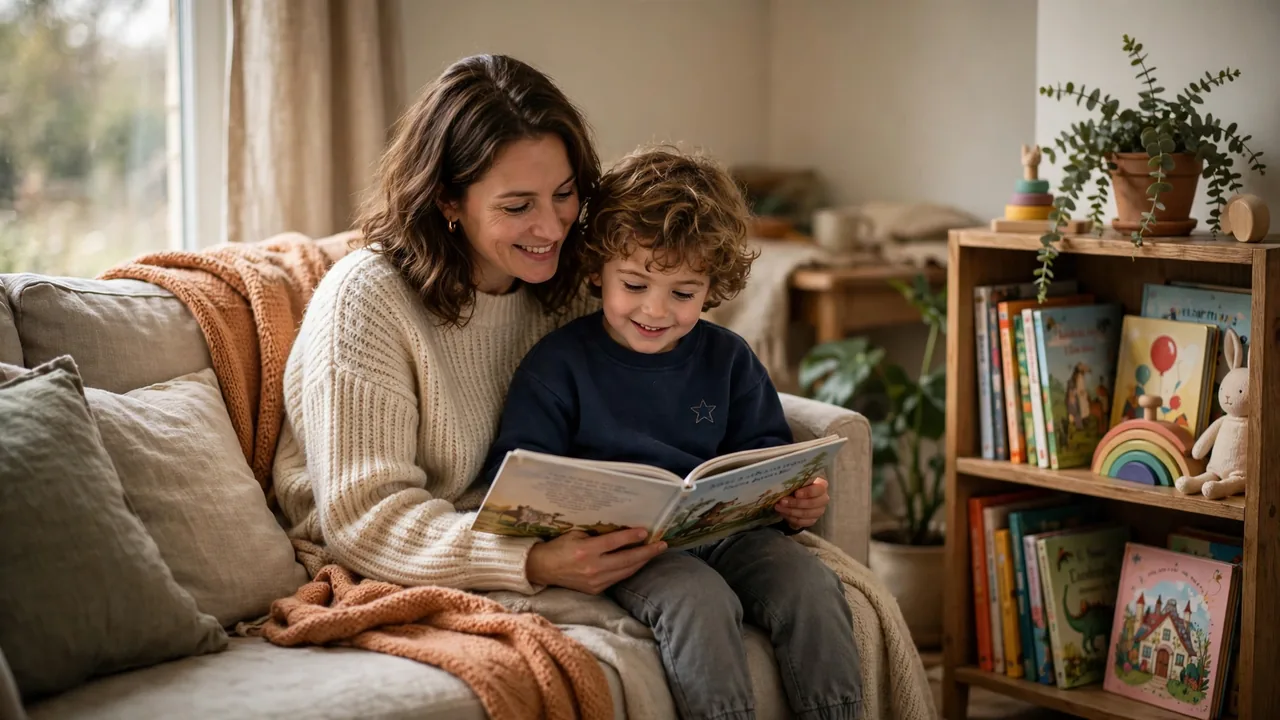
Every parent wants their child to love books, yet building a reading habit in children rarely happens by accident. It grows out of small, repeatable moments: a story before bed, a comic traded at breakfast, a library card used every Saturday. The good news is that you do not need expensive programmes or a house full of books to raise a reader. You need access, routine and a little patience, applied consistently over months rather than days.
This guide explains how to build a reading habit in children aged roughly three to twelve, with practical steps you can start tonight and adjust as your child grows.
Why a Reading Habit in Children Matters So Much
Children who read for pleasure tend to build larger vocabularies, stronger comprehension and better concentration than children who only read when school requires it. Reading also feeds imagination and empathy, because stories let children live inside other minds for a while. Just as importantly, a child who reads daily develops stamina for longer texts, which quietly supports every school subject, from word problems in maths to source analysis in history.
The habit matters more than the level. A child who reads slightly easy books every day gains more than a child who struggles through one difficult book a month, because volume is what turns decoding into fluency.
Start With Access: Put Books Within Reach
Children read what they can reach. Keep a small, rotating selection of books where your child already spends time: beside the bed, near the sofa, even in the car. A basket of eight to ten books, refreshed every couple of weeks from the library, works better than a tall shelf of untouched titles.
Variety helps. Mix picture books, comics and graphic novels, short chapter books, poetry and non-fiction about whatever currently fascinates your child, whether that is dinosaurs, football or space. If your family speaks more than one language, include books in each of them; our guide on why you should learn a language explains how early exposure to a second language supports literacy in both.
Make Reading Part of the Daily Routine
Habits attach to routines. Ten to twenty minutes at the same time each day, most often before bed, gives reading a fixed home in your child’s day. Protect that slot the way you protect mealtimes. If evenings are chaotic, anchor reading to breakfast or the journey to school instead.
Reading time fits naturally inside a wider evening structure. If your family is still building one, our guide to creating a homework routine for kids shows how to sequence homework, reading and wind-down time so each supports the others rather than competing for the same tired hour.
Let Children Choose Their Own Books
Choice is the engine of the reading habit in children. A book a child picks for themselves, even a silly comic you would never have chosen, gets finished far more often than an improving title imposed from above. Take your child to the library or bookshop regularly and let them browse without steering. Set a simple rule, such as any three books they want plus one you suggest, and honour it.
Choice also protects free exploration. Children need unstructured time with books just as they need unstructured play; our article on how to balance structured learning with free play explains why self-directed time is where motivation grows strongest.
Read Aloud Long After They Can Read Themselves
Many parents stop reading aloud once a child can decode independently, usually around age seven. That is a missed opportunity. Listening comprehension runs ahead of reading comprehension for years, so reading aloud lets your child enjoy richer stories, harder vocabulary and longer plots than they could manage alone. It also keeps reading associated with warmth and attention, which is the emotional foundation of the habit.
Take turns reading pages, pause to predict what happens next, and talk about the characters afterwards. Asking a child what a character should do, or how a problem might be solved, turns listening into thinking; our guide to teaching problem-solving through fun activities offers more ways to build that kind of discussion into everyday life.
Model the Habit and Talk About Books
Children copy what they see. If the adults at home read visibly, on paper rather than only on phones, reading looks like a normal adult pleasure rather than homework. Keep your own book where your child can see it, and read during some of the same quiet times.
Talk about books the way you talk about films or matches: mention a character at dinner, recommend a title to your child because it reminded you of them, and ask what they are reading now. These small conversations tell your child that books are part of the family’s shared culture, one of the healthy routines discussed in our article on helping children build healthy habits for body and mind.
Balance Screens Instead of Banning Them
Screens compete with books for the same leisure minutes, so the goal is balance rather than prohibition. Keep bedrooms screen-free at night so the pre-sleep slot belongs to reading, charge devices outside bedrooms, and agree family media times together so rules feel fair. Audiobooks count too: listening to a story on a journey builds the same vocabulary and narrative sense, and often hooks a reluctant reader into a series they then continue on paper.
Adjust the Reading Habit as Children Grow
For ages three to five, favour short picture books, rhyme and repetition, and let your child turn pages and retell the story in their own words. For ages six to eight, introduce short chapter books and series, which carry children forward through familiar characters. For ages nine to twelve, protect independence: offer non-fiction, graphic novels and longer fiction, swap recommendations, and resist correcting every stumble, because fluency grows through volume, not perfection.
At every age, keep feeding curiosity. Children read most willingly about what they wonder about, a principle at the heart of our guide on how parents can promote creativity and curiosity in everyday life.
When Reading Feels Like a Struggle
If your child resists, first check the level: a book they cannot read with about ninety-five percent accuracy will feel like work, so drop down a level without comment. Try a different format, especially graphic novels or funny books, and never use reading as a punishment or withdraw it as one. If difficulties persist despite easy books and daily practice, speak to your child’s teacher about screening for vision problems or reading difficulties such as dyslexia. Early support makes a large difference, and asking is a strength, not a failure.
Above all, stay patient. A reading habit in children is built the way all durable habits are built: small steps, repeated kindly, over a long time. Start with ten minutes tonight, one book your child chooses, and your full attention. That is enough to begin.
