
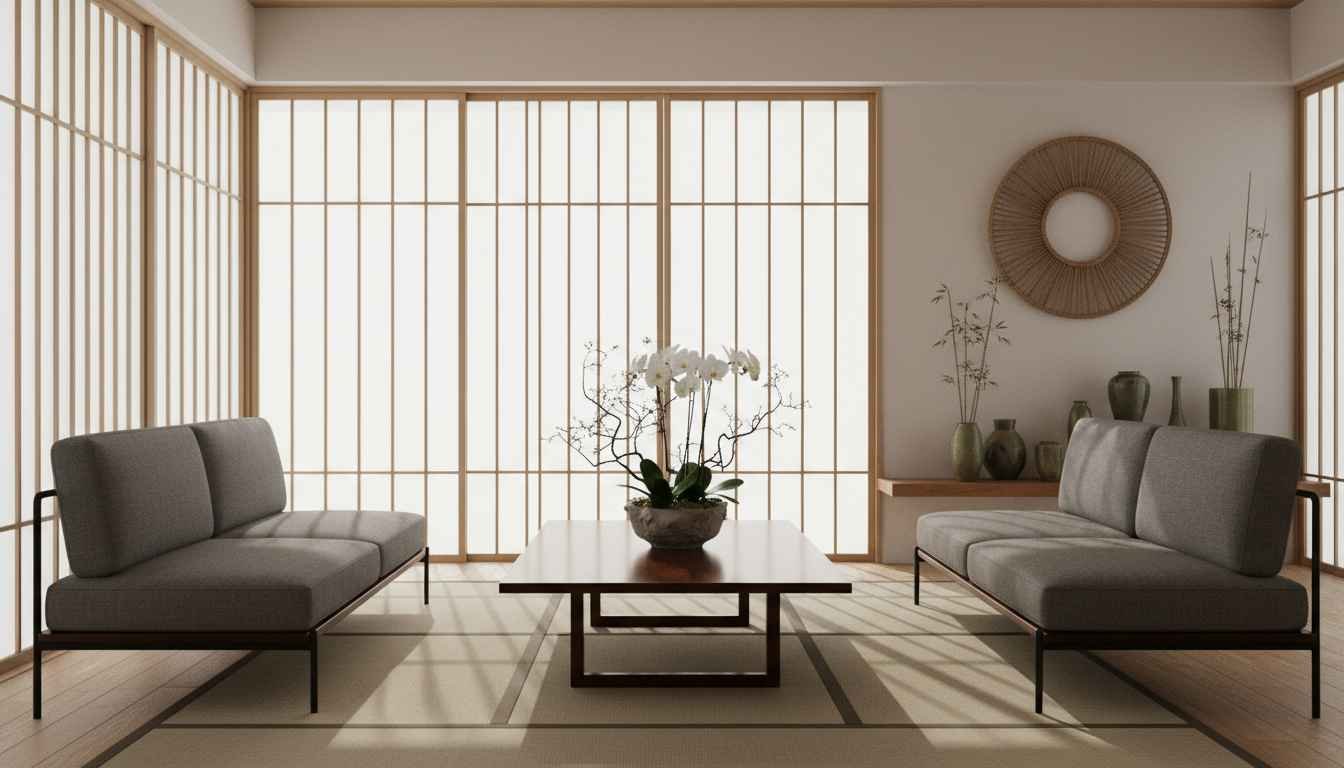
Quality over quantity. Japanese home decor has long been admired for its minimalist elegance and mindful attention to detail. From the subtle shimmer of shoji screens to the natural textures of tatami mats, each element is carefully curated to create a sense of harmony.
1600s: The Birth of Zen Influence
The Edo period in Japan introduced the world to the understated beauty of Zen-inspired interiors. Homes emphasized open space, natural light, and a restrained color palette. Tatami flooring became standard, while sliding doors allowed rooms to adapt with the seasons. According to Dr. Yuki Tanaka, a historian specializing in Japanese interiors, “Zen principles in home design encourage tranquility and mindfulness in daily living.”
1900s: Fusion with Modernity
As Japan industrialized, traditional elements began blending with Western influences. Decorative objects like porcelain vases, lacquerware, and wall scrolls became more common in urban homes. This era showed that Japanese decor could be both functional and visually striking. Today, modern homeowners often mix vintage pieces with contemporary furniture for a balanced aesthetic.
2000s: Minimalist Renaissance
The global rise of minimalism brought renewed attention to Japanese-style interiors. Simple lines, neutral tones, and clutter-free spaces became aspirational. Homeowners now favor natural materials like bamboo, rattan, and reclaimed wood. Incorporating indoor plants and bonsai trees adds life without overpowering the calm environment. For those curious, Jenna Sue Design Blog offers practical tutorials on integrating these elements without feeling overwhelmed.
Decision Matrix for Japanese Home Decorations
| If You Want | Then Consider |
|---|---|
| Tranquility | Zen gardens, tatami mats, shoji screens |
| Warmth | Natural wood furniture, bamboo accents, soft lighting |
| Color | Muted palettes with seasonal floral touches |
| Functionality | Multipurpose furniture, sliding doors, minimal clutter |
Potential Drawbacks
While Japanese decor promotes serenity, it can feel sparse or cold to some. Maintaining tatami mats and natural wood surfaces requires extra care. Those who prefer vibrant colors and heavy textures may find the minimalist approach challenging. Balancing practicality with aesthetic is key to avoiding an overly sterile environment.
Looking Ahead
As global interest in sustainable living grows, Japanese home decorations continue to inspire eco-conscious choices. Materials that age gracefully and designs that prioritize simplicity align perfectly with modern sustainable living goals.
