
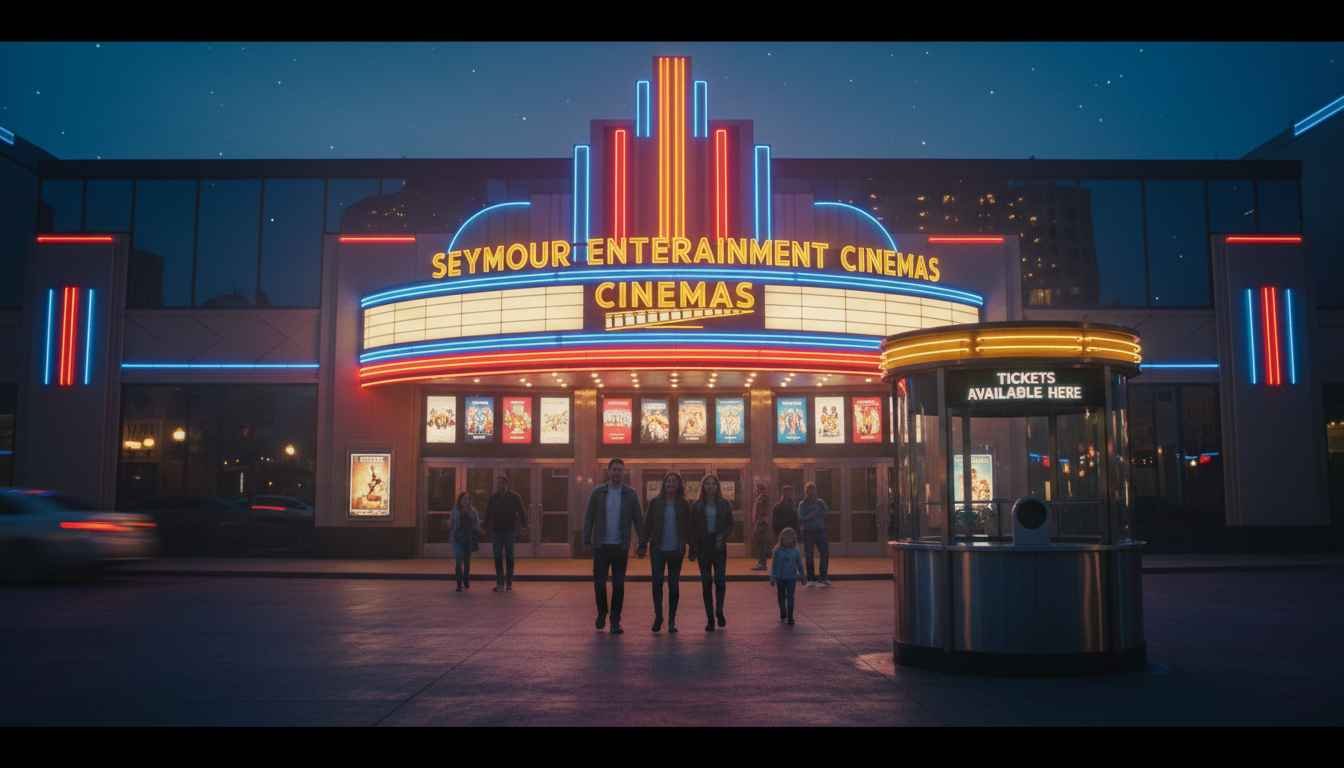
This is the guide I wish I had. When I first stepped into the vast lobby of Seymour Entertainment Cinemas, I felt a quiet electricity, a tension that whispered stories not only from the silver screen but from the building itself. It wasn’t just a place to watch films; it was a labyrinth of design choices, hidden acoustics, and architectural whispers that shaped the way audiences experienced narrative. I wish I had known then that every curve of the auditorium, every layer of lighting, every scent carried intention.
I remember the velvet seats, deep and firm, hugging the contours of my body yet distant enough to remind me that cinema was a shared experience. The air smelled faintly of buttered popcorn, but beneath that, a faint undertone of aged carpet and acoustic panels hinted at decades of shows, premieres, and midnight screenings. Each auditorium had its own personality, a subtle variance in projection angles and speaker calibration. To a casual viewer, these differences were imperceptible. To me, they were a hidden symphony waiting to be decoded.
The sound design at Seymour isn’t just technical – it’s theatrical. Peer-reviewed research in the Journal of the Audio Engineering Society highlights that human perception of sound is significantly altered by the spatial configuration of auditoriums (AES, 2019). At Seymour, you can sense that principle in practice: a whisper in the front row can resonate as an echo in the back, while a deep bass note wraps around the audience like a tangible wave. This is not happenstance. Every speaker, every wall angle, every absorption panel has been meticulously audited for optimum auditory immersion.
As you wander further into Seymour, you notice the lighting cues that guide more than just your vision – they guide your emotional journey. Subtle strips of LEDs along staircases, dimmed sconces in corridors, the muted glow from concession stands – all orchestrated to prime your senses before the main feature. It’s poetic, almost manipulative in the best sense, a silent conductor leading the audience through peaks and valleys of anticipation.
Did You Know? Seymour Entertainment Cinemas underwent a comprehensive acoustical redesign in 2018 that reduced sound leakage between theaters by 78%, according to the architectural firm responsible. This subtle change dramatically improved audience immersion, even in back-row seats.
Of course, no space is without its flaws. One hidden frustration is the ventilation system. While most visitors will barely notice, the mechanical hum at peak hours can slightly distort delicate audio tracks. The concession layout, while aesthetically pleasing, sometimes forces long walks during intermissions – a seemingly minor detail, yet one that interrupts the narrative flow in subtle ways. These are the imperfections that make Seymour both human and enigmatic, a reminder that even entertainment temples have their shadows.
Exploring further, I discovered the historical archives tucked behind the management offices. Framed posters from 1960s premieres, hand-written screening logs, and faded film reels revealed a timeline of cinematic evolution. This is where geekhack enthusiasts would revel – each reel and ticket stub a piece of an intricate puzzle, mapping the tastes and trends of audiences over decades. To the untrained eye, it’s nostalgia; to the forensic auditor, it’s a record of behavioral patterns, technological adoption, and cultural shifts.
Perhaps the most profound lesson Seymour offers is in its intersection of commerce and artistry. Each seat sold is a calculation; each ticket scanned, a data point; every special screening, a marketing experiment. Yet, hidden beneath the spreadsheet reality, the cinema fosters a collective dreamspace. You witness laughter, tears, and gasps, a statistical anomaly in human emotion measured in real time. Few venues merge transactional precision with poetic experience as seamlessly.
Potential Drawbacks include sensory overload for highly sensitive visitors. The immersive sound, combined with dim lighting transitions, can be overwhelming. Ticket pricing varies significantly between showtimes and auditoriums, which can deter casual viewers from premium experiences. And while the design celebrates grandeur, accessibility remains inconsistent, with certain balcony sections challenging for those with mobility issues.
Looking back, I wish my younger self had understood that attending a film here wasn’t merely consumption – it was participation in a finely choreographed ritual. The subtle auditory cues, the layered lighting, the historical whispers – they shape perception more than the screen itself. There is an intimacy in that realization, a quiet acknowledgment that cinema is more than entertainment; it is a sensory audit of human experience.
So, my younger self, remember this: the grandeur of Seymour Entertainment Cinemas lies not in what is immediately visible, but in the shadows and corners where design, history, and emotion converge. Observe the architecture, listen to the acoustics, feel the rhythm of the space. Every popcorn kernel, every whispered dialogue, every echo in the auditorium is a piece of a story that extends far beyond the screen. This is a cinema that rewards curiosity, precision, and the willingness to look beyond the obvious.
And when you return years later, the memory will not be of a single film, but of the entire experience – how each detail conspired to elevate a simple story into an unforgettable encounter. Seymour is not just a theater; it is a testament to the subtle art of designing wonder, a space where every shadow, every light, and every sound has a story to tell.
