
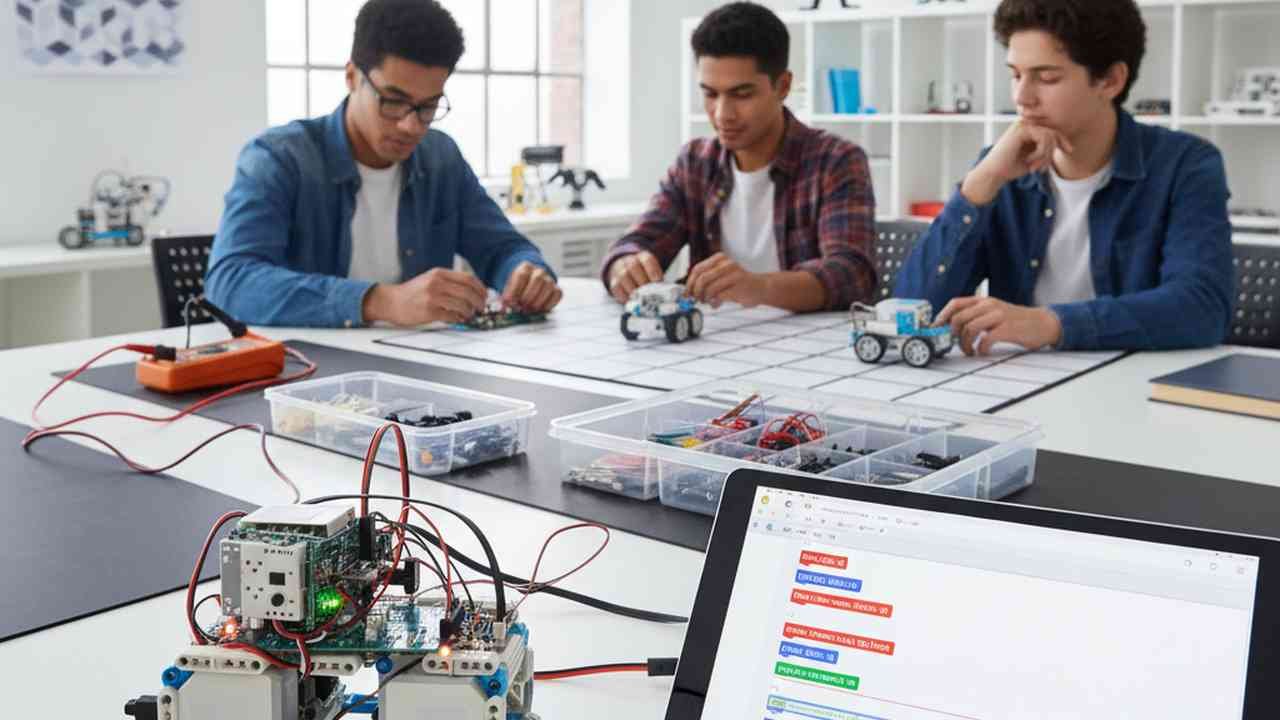
In a world where technology evolves at lightning speed, the demand for STEM (Science, Technology, Engineering, and Mathematics) education has never been more urgent. Parents, educators, and aspiring innovators are scrambling to equip the next generation with the skills necessary to thrive in an increasingly digital landscape. If you’re still relying on outdated teaching methods, you’re already falling behind. The future is now, and it’s time to act before your child misses out on the opportunities that lie ahead.
Across the globe, governments are recognizing the critical importance of STEM education. In France, for instance, the Minister of National Education, Édouard Geffray, has been at the forefront of initiatives aimed at strengthening digital skills among students. Under his leadership, the French Ministry has launched a series of measures to accelerate the use of digital technology in education, ensuring that students are not left behind in the digital age. These efforts underscore the urgency of adopting modern educational tools that prepare students for the challenges of tomorrow.
One of the most effective ways to introduce young learners to the world of coding, robotics, and electronics is through hands-on STEM kits. These kits transform abstract concepts into tangible experiences, allowing beginners to engage with technology in a meaningful way. But with so many options available, how do you choose the right one? The answer lies in selecting kits that are not only educational but also engaging, versatile, and aligned with current educational standards.
The Importance of Hands-On Learning in STEM Education
Traditional classroom settings often struggle to keep pace with the rapid advancements in technology. Students may find it challenging to grasp complex concepts through lectures alone. This is where hands-on learning comes into play. By actively engaging with materials and tools, students can better understand and retain information. STEM kits provide an interactive platform for learners to explore coding, robotics, and electronics in a practical setting.
For example, the mBot Robot Kit offers an entry-level coding experience for children aged 8 to 12. This kit allows users to build and program their own robots using Scratch and Arduino, providing a solid foundation in programming and electronics. Similarly, LittleBits offers modular electronics kits that snap together easily, enabling users to create functional circuits without the need for soldering. These hands-on experiences not only make learning more enjoyable but also foster critical thinking and problem-solving skills.
Moreover, hands-on learning aligns with the educational reforms being implemented by the French Ministry of National Education. By incorporating interactive STEM kits into the curriculum, educators can provide students with the practical experience needed to succeed in a technology-driven world. This approach not only enhances student engagement but also ensures that learners are equipped with the skills necessary for future success.
Top STEM Kits for Beginners
With the plethora of STEM kits available, selecting the right one can be overwhelming. To help narrow down the choices, here are some of the top-rated kits that cater to beginners:
1. mBot Robot Kit: Designed for children aged 8 to 12, this kit offers an introduction to coding and robotics using Scratch and Arduino. It’s an excellent choice for those looking to delve into the world of programming.
2. LittleBits Electronics Kits: These modular kits allow users to create functional circuits without soldering. They’re perfect for beginners interested in exploring electronics in a hands-on manner.
3. Sphero Bolt+: A spherical robot that can be programmed to move and interact, providing an engaging way to learn coding and robotics concepts. Its durable design makes it suitable for various learning environments.
4. Lego Mindstorms NXT: Combining the versatility of Lego with programmable robotics, this kit offers a comprehensive introduction to building and programming robots.
5. Climate Action Kit by Forward Education: This kit focuses on teaching coding and robotics within the context of climate change and sustainability, aligning with global educational priorities.
Each of these kits offers unique features that cater to different aspects of STEM education. When selecting a kit, consider the learner’s age, interests, and the specific skills you wish to develop. Remember, the goal is not just to teach technology but to inspire a passion for learning and innovation.
Aligning with Educational Standards
As the world becomes more interconnected, the need for standardized education becomes increasingly important. Educational standards ensure that all students, regardless of their background, receive a quality education that prepares them for the future. In France, the Ministry of National Education has been actively involved in aligning educational practices with international standards, particularly in the realm of STEM education.
Initiatives like the ESERO France program provide free classroom materials that cater to the French STEM curriculum. These resources support interdisciplinary school projects and offer access to STEM career information and role models from the space sector. Such programs not only enhance the learning experience but also inspire students to pursue careers in STEM fields.
By integrating STEM kits that align with these standards, educators can ensure that students are receiving an education that is both relevant and rigorous. This alignment also facilitates the recognition of students’ achievements on a global scale, opening doors to opportunities in higher education and the workforce.
The Role of Parents in STEM Education
While educators play a crucial role in STEM education, parents also have a significant impact on their children’s learning experiences. By actively engaging with their children’s education, parents can reinforce the concepts taught in school and foster a love for learning.
One way parents can support STEM education is by providing access to quality STEM kits. These kits offer opportunities for parents and children to collaborate on projects, strengthening their bond while enhancing the child’s learning experience. Additionally, parents can encourage their children to explore STEM subjects outside of the classroom by visiting science museums, watching educational programs, and participating in community events.
Furthermore, parents can advocate for the inclusion of STEM education in school curricula. By voicing their support for STEM initiatives, parents can influence educational policies and ensure that future generations are equipped with the skills necessary to succeed in a technology-driven world.
Overcoming Challenges in STEM Education
Despite the growing emphasis on STEM education, several challenges persist. One of the primary obstacles is the lack of access to quality resources, particularly in underfunded schools and communities. Without the necessary tools and materials, students may be unable to engage fully with STEM subjects.
To address this issue, programs like ESERO France provide free innovative classroom materials that cater to the French STEM curriculum. These resources help bridge the gap by offering educators the tools they need to teach STEM effectively. Additionally, partnerships between schools, governments, and private organizations can facilitate the distribution of STEM kits to underserved communities, ensuring that all students have equal opportunities to succeed.
Another challenge is the gender disparity in STEM fields. Efforts are being made to promote gender parity in STEM education, but progress is slow. Initiatives aimed at encouraging girls to pursue STEM subjects are essential in creating a more inclusive and diverse workforce. By providing female students with role models and mentors in STEM fields, we can inspire the next generation of female innovators and leaders.
Future Trends in STEM Education
The landscape of STEM education is continually evolving. As technology advances, so too do the methods and tools used to teach STEM subjects. One emerging trend is the integration of artificial intelligence (AI) into educational platforms. AI-powered tools can provide personalized learning experiences, adapting to each student’s pace and learning style.
Platforms like Imagi are at the forefront of this trend. Imagi combines curriculum-aligned lesson plans with a gamified learning environment and physical devices called ImagiCharms. These small gadgets enhance students’ real-world STEM experience and serve as a transition from block-based to text-based coding. Such innovations are revolutionizing the way STEM subjects are taught and learned.
Another trend is the focus on sustainability and climate change within STEM education. Kits like the Climate Action Kit by Forward Education teach coding and robotics concepts within the context of climate change and sustainability. This approach not only equips students with technical skills but also instills a sense of responsibility towards the environment.
As these trends continue to develop, it’s crucial for educators, parents, and policymakers to stay informed and adapt to the changing landscape of STEM education. By embracing new technologies and methodologies, we can ensure that students are prepared for the challenges and opportunities of the future.
Conclusion: Seize the Opportunity
The urgency of integrating STEM education into learning curricula cannot be overstated. As the digital age progresses, the gap between those with access to quality STEM education and those without will continue to widen. To ensure that future generations are not left behind, it’s imperative to act now.
Investing in creative STEM kits is a proactive step towards equipping learners with the skills necessary to navigate and succeed in a technology-driven world. These kits provide hands-on experiences that foster creativity, critical thinking, and problem-solving abilities. Moreover, they align with educational standards and initiatives aimed at strengthening digital skills among students.
Don’t wait for the future to arrive – prepare for it today. By embracing STEM education and providing learners with the tools they need to succeed, we can shape a brighter, more innovative future for all.
