
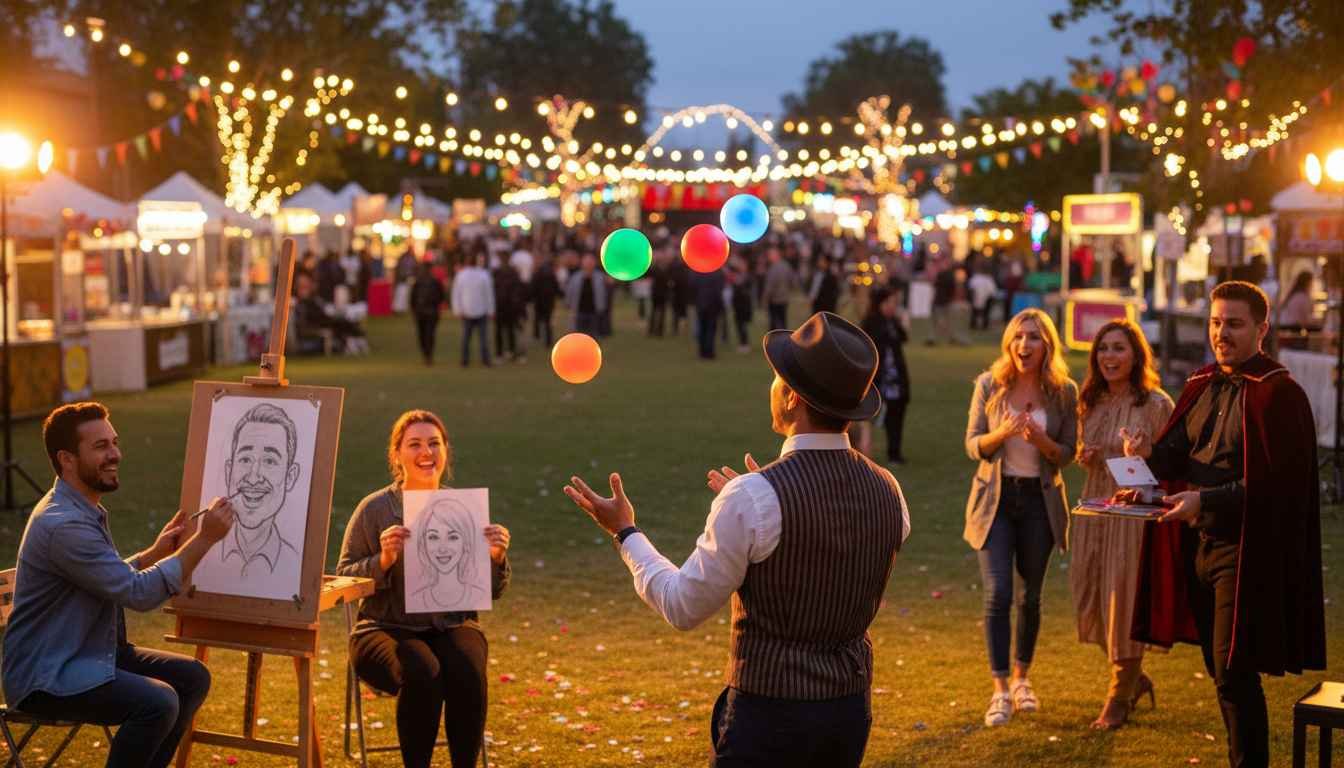
I know exactly how you feel when every event pitch sounds recycled, predictable, safe. I’ve walked those backstreets, slipped into pop-up venues, and watched crowds light up when something unexpected finally happens. I’m the local guide people DM after the lights go down asking, how did you even find this?
AMA Simulation The Crowd Asks I Answer
Q Why do most event entertainment ideas feel stale
Because they’re designed from spreadsheets, not streets. The industry copies what worked last quarter instead of what excites people right now. Audiences sense that instantly. Attention spans at live events have dropped below eight minutes, according to recent media engagement studies, so repetition kills momentum fast.
Q What actually works in real venues
Entertainment that feels discovered, not delivered. Think roaming performers who emerge mid-conversation, silent headphone battles that hijack dead space, or data-driven visuals reacting live to crowd noise. These ideas don’t shout. They sneak up on people.
The Step-by-Step Flowchart I Use Every Time
Step one starts with friction. Identify where guests get bored, usually check-in or transitions. Step two is disruption. Insert a sensory shift like sound, motion, or competition. Step three is participation. Let the crowd influence outcomes in real time. Step four is capture. Build moments people instinctively record. Step five is memory. Close with a shared climax everyone talks about on the way home.
This flow works because it mirrors how fans experience live sport. That’s why I study motorsport crowds and media behavior obsessively. If you track how Formula 1 audiences react to live data, visuals, and rivalry storytelling, you’ll see why platforms like GPblog keep people hooked beyond the race itself.
Q Is this expensive to pull off
Not always. The most effective idea I’ve seen cost under five percent of the total event budget. It was a local DJ synced to live audience heart-rate data via wearables. The tech existed. The insight was knowing where to deploy it.
Potential Drawbacks You Should Know
Radical entertainment ideas come with risk. Not every crowd wants to participate. Some demographics prefer passive viewing. There are also technical failure points when you rely on live data or audience input. I’ve seen brilliant concepts fall flat because Wi-Fi failed or instructions weren’t clear.
Q Who should avoid this approach
If your event is highly regulated, formal, or compliance-heavy, heavy disruption can backfire. Corporate audiences with strict agendas may resist surprise elements. In those cases, subtle immersion works better than overt spectacle.
The Hidden Gem Mindset
Event entertainment ideas succeed when they feel local, contextual, and slightly rebellious. Stop asking what entertained people last year. Ask what would make this crowd feel like insiders tonight. That’s where the magic hides.
