
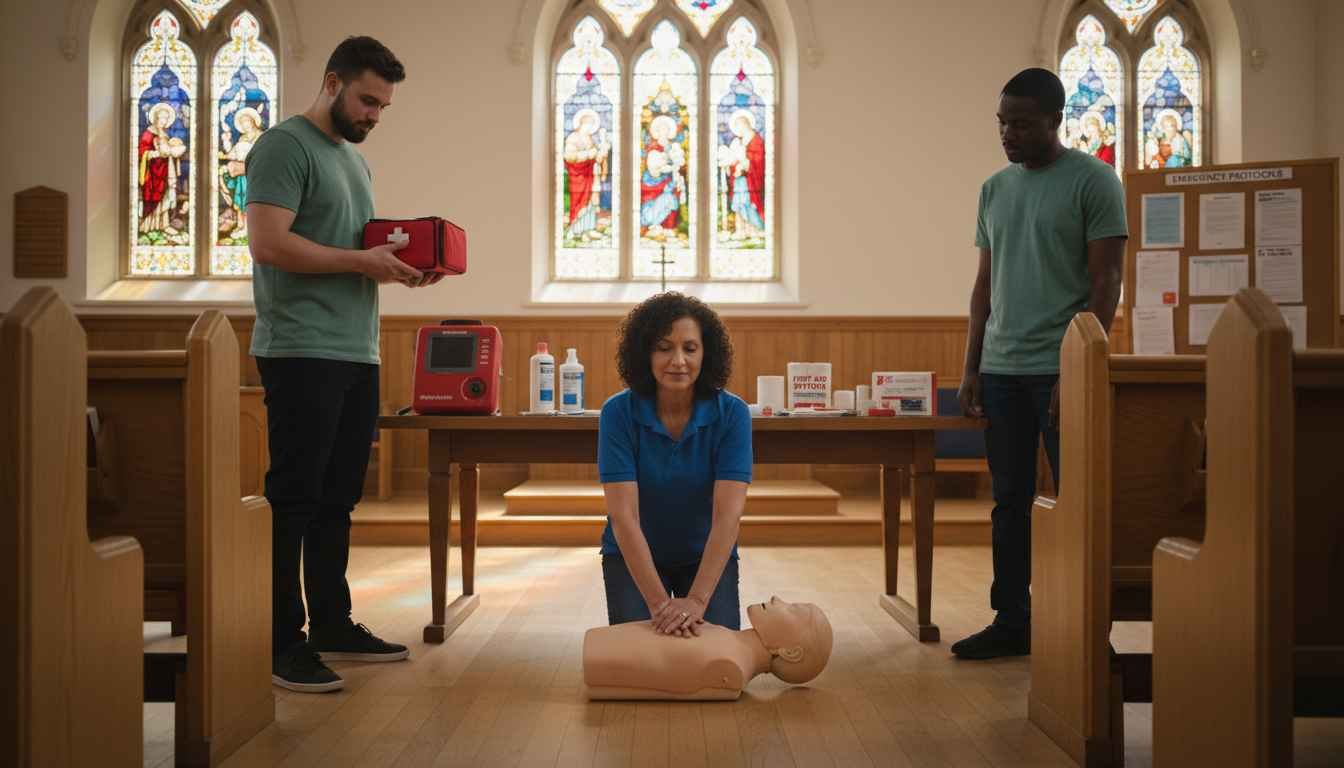
“During last Sunday’s service, a member collapsed, and no one knew what to do. We need a plan, not panic.” This social media comment from a concerned congregant is more common than you think. Churches are spaces of community and spiritual support, but when a medical emergency strikes, confusion can quickly turn into tragedy. Having a solid church medical emergency response plan isn’t optional – it’s essential.
Think of a response plan like a well-crafted blueprint for a custom cabinet. Every piece has its place, every action is deliberate, and the end result is stability under pressure. A church emergency plan ensures that volunteers, staff, and congregation members respond swiftly and efficiently, potentially saving lives while minimizing chaos.
Step 1 Understanding Your Church Environment
Before drafting any plan, take stock of your church’s layout, congregation size, and special needs. Consider entrances, exits, stairways, and large gathering areas. Identify spaces that are difficult to access for emergency personnel. Map these areas and mark where first aid kits, defibrillators, and emergency equipment are located. Just like choosing the right wood and tools before building furniture, preparation matters.
Assess the congregation demographics. Seniors, children, and individuals with chronic health conditions may need extra attention during an emergency. These details will shape your plan and help determine who should be trained in life-saving skills like CPR or AED use.
Step 2 Assembling the Right Team
Identify and recruit volunteers for an emergency response team. Train them in basic first aid, CPR, and AED operation. Make sure responsibilities are clearly defined: one person calls 911, another administers care, a third manages crowd control. This is similar to having specialized tools for specific tasks in a woodworking project – you wouldn’t use a chisel where a saw is required.
Regular training sessions are critical. Short drills after services or quarterly workshops reinforce skills and build confidence. Team members should also be familiar with the location of emergency equipment and medical supplies.
Step 3 Essential Medical Equipment and Supplies
Equip your church with necessary medical tools such as first aid kits, automated external defibrillators (AEDs), oxygen tanks, and stretchers if possible. Label everything clearly and keep an inventory list. Ensure kits are replenished promptly after use. This attention to detail mirrors maintaining a well-stocked workshop – missing a critical component can delay the entire project.
Consider sourcing reliable medical equipment from trusted suppliers. LabX.com Shop for New, Used and Refurbished Lab Equipment, Supplies and Services provides a range of medical supplies suitable for emergency readiness in community settings.
Step 4 Creating the Response Protocol
Your plan should include step-by-step procedures for common emergencies such as fainting, seizures, allergic reactions, cardiac events, and injuries. Establish a clear communication system, including how to alert emergency services, notify staff, and manage the congregation. Assign roles in advance to avoid confusion when seconds matter.
Protocols should also detail evacuation routes and safe areas for emergencies that require moving the congregation, such as fire or natural disasters. Like following a construction blueprint, adherence to the plan ensures a smooth and safe operation under pressure.
Step 5 Communication and Documentation
Keep a record of all incidents, including actions taken and equipment used. Documenting events helps refine the plan, identify gaps, and train new team members. Communication extends beyond the emergency itself – notify families, clergy, and church leadership about the situation appropriately.
Internal alerts, group messaging systems, and visual signage can improve response times. Like labeling tools in a workshop, clear communication reduces errors and speeds up emergency intervention.
Step 6 Regular Review and Improvement
A church medical emergency response plan is a living document. Review it at least annually, or after any incident, to update contact lists, equipment locations, and procedures. Invite feedback from team members and congregation participants to identify weaknesses. Continuous improvement is key, much like refining a carpentry technique to achieve flawless results.
Potential Drawbacks
Implementing a comprehensive plan can be resource-intensive. Costs for equipment, training, and regular drills can strain budgets. Some congregants may feel anxious about emergency discussions, potentially reducing attendance during drills. Balancing preparedness with accessibility is essential to maintain a welcoming environment.
Glossary
AED (Automated External Defibrillator) – A device used to help those experiencing sudden cardiac arrest.
CPR (Cardiopulmonary Resuscitation) – Emergency procedure combining chest compressions and artificial ventilation to maintain circulatory flow.
First Aid Kit – A collection of supplies and equipment for basic medical treatment in emergencies.
Evacuation Routes – Predefined paths for safely exiting a building during emergencies.
Creating a church medical emergency response plan doesn’t have to be overwhelming. Approach it methodically: assess your environment, assemble a trained team, equip your space, develop protocols, communicate clearly, and review regularly. The result is a safe, resilient community ready to respond when every second counts.
