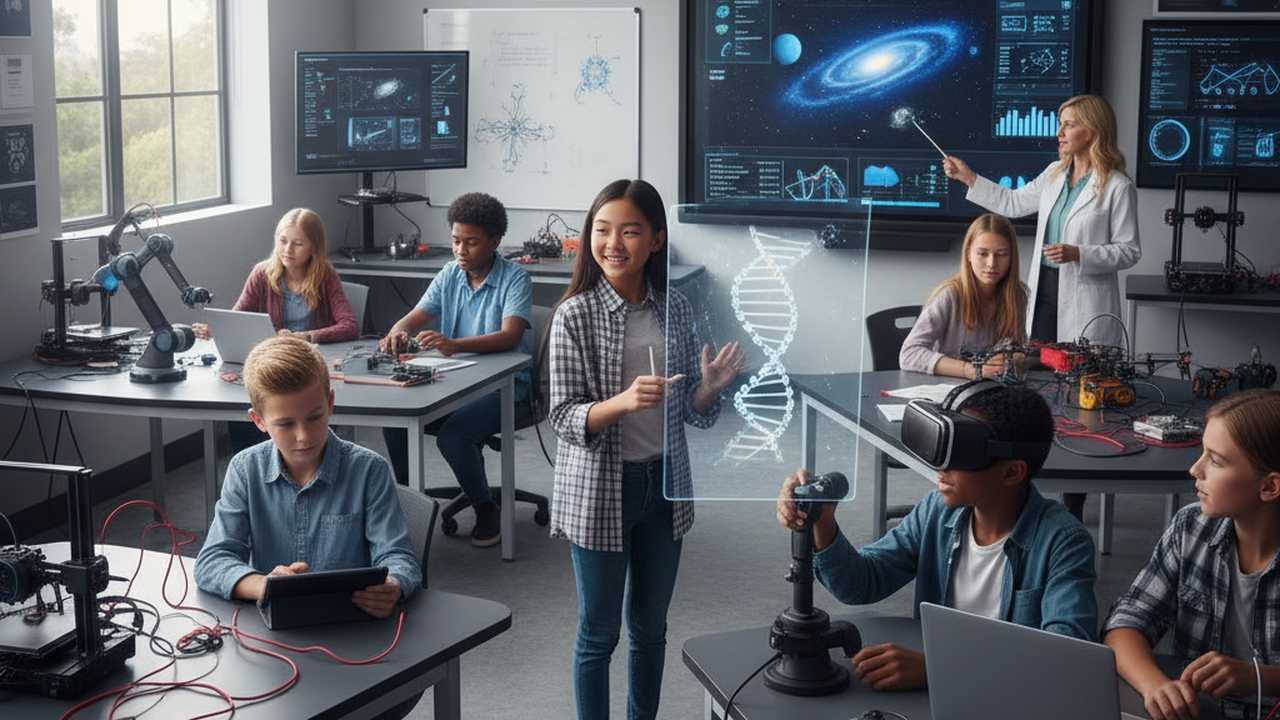
In the rapidly evolving educational landscape, the integration of technology into STEM classrooms has become not just an option but a necessity. Schools that fail to embrace this shift risk leaving their students ill-prepared for the future. Imagine a classroom where students are not merely passive recipients of information but active participants in their learning journey. This transformation is happening now, and those who hesitate may find themselves left behind.
The Urgency of Technological Integration in STEM Education
The world is changing at an unprecedented pace, and education must keep up. Traditional teaching methods, while foundational, are no longer sufficient to equip students with the skills they need. The integration of technology into STEM classrooms is not a luxury; it is a critical step towards preparing students for the challenges of the 21st century. Schools that delay this integration risk falling behind, as they fail to provide students with the tools necessary for success in a technology-driven world.
Consider the impact of interactive whiteboards, coding platforms, and simulation software. These tools do more than enhance learning; they make it possible. Students can now visualize complex scientific concepts, engage in real-time problem-solving, and collaborate across distances. The classroom becomes a dynamic environment where learning is personalized, interactive, and deeply engaging. Without these technologies, students are left with outdated resources that fail to capture their interest or prepare them for future careers.
Enhancing Engagement Through Interactive Technologies
One of the most compelling reasons to integrate technology into STEM education is its ability to boost student engagement. Traditional textbooks and lectures can be dry and disengaging. However, when students interact with digital simulations, participate in virtual labs, or use coding platforms, learning becomes an immersive experience. These technologies allow students to experiment, make mistakes, and learn from them in a safe environment.
For instance, virtual reality (VR) can transport students to distant planets, allowing them to explore the solar system firsthand. Augmented reality (AR) can bring static images to life, enabling students to interact with 3D models of molecules or historical artifacts. These experiences not only make learning more exciting but also deepen understanding by providing context and visualization that traditional methods cannot offer.
Personalized Learning Paths for Diverse Learners
Every student learns differently, and technology can cater to these diverse learning styles. Adaptive learning platforms use algorithms to assess a student’s current understanding and tailor lessons to meet their needs. This personalization ensures that students are neither bored with material that is too easy nor overwhelmed by content that is too challenging.
Moreover, technology enables students to learn at their own pace. Whether they need to review a concept multiple times or move ahead quickly, digital tools provide the flexibility to do so. This autonomy fosters a sense of ownership over learning and encourages students to take responsibility for their educational journey.
Preparing Students for Future Careers
The integration of technology in STEM classrooms is not just about enhancing current learning experiences; it is also about preparing students for future careers. In fields like engineering, data science, and biotechnology, proficiency with digital tools is essential. By incorporating coding, robotics, and data analysis into the curriculum, schools equip students with skills that are in high demand in the job market.
Furthermore, exposure to these technologies helps students develop critical thinking and problem-solving skills. They learn to approach challenges methodically, test hypotheses, and iterate on solutions – skills that are invaluable in any profession. Schools that fail to provide these experiences risk graduating students who are ill-prepared for the demands of the modern workforce.
Fostering Collaboration and Communication
Modern workplaces value collaboration and communication, and these skills can be cultivated in the classroom through technology. Digital platforms enable students to work together on projects, share ideas, and provide feedback in real-time. Tools like Google Classroom, Microsoft Teams, and Slack facilitate seamless communication and collaboration, even in remote or hybrid learning environments.
These collaborative experiences mirror real-world scenarios, where teamwork and effective communication are crucial. By integrating these tools into the classroom, schools help students develop interpersonal skills that will serve them well in their future careers.
Overcoming Challenges in Technology Integration
While the benefits of integrating technology into STEM classrooms are clear, the path to implementation is not without challenges. Issues such as limited access to devices, inadequate training for educators, and resistance to change can hinder progress. However, these obstacles are not insurmountable.
Schools can seek funding through grants and partnerships to acquire necessary technology. Professional development programs can equip educators with the skills they need to effectively use digital tools. Additionally, fostering a culture that embraces change and innovation can help overcome resistance. The key is to view these challenges as opportunities for growth and improvement.
Real-World Success Stories
Across the globe, schools are successfully integrating technology into their STEM curricula. For example, in Punjab, India, the government has launched an AI-assisted digital e-learning initiative to enhance Punjabi language education. This project includes interactive video content, quizzes, and AI tools for real-time feedback, making learning more accessible and engaging for students.
Similarly, in Kerala, the Navy Children School has partnered with the Kerala Infrastructure and Technology for Education (KITE) to establish AI and robotics labs. This collaboration aims to advance STEM education through hands-on learning experiences, preparing students for future careers in technology.
These examples demonstrate that with the right resources and commitment, technology integration can lead to improved learning outcomes and better prepare students for the future.
Conclusion: The Time to Act is Now
The integration of technology into STEM classrooms is not a passing trend; it is the future of education. Schools that embrace this change will provide their students with the tools and skills necessary to succeed in an increasingly digital world. Those that hesitate risk falling behind, leaving their students unprepared for the challenges and opportunities that lie ahead.
Now is the time to act. Educators, administrators, and policymakers must work together to ensure that all students have access to the technologies and experiences that will prepare them for the future. The world is changing, and education must change with it.
If you explore the transformative effects of practical engineering projects, you’ll discover how initiatives like glassdoor guild education can significantly boost student confidence and foster a deeper understanding of complex concepts.
If you want to enhance your students’ teamwork and leadership abilities, consider exploring the opportunities provided by the Hillsboro Education Association, which emphasizes the importance of STEM competitions in fostering these essential skills.
If you want to understand how early exposure to STEM can shape future innovators, consider the insights from ingrid jacques education, which highlights the critical role of foundational learning in these fields.